Use this guide to prepare for a conversation with your installer.
Can either floor work?
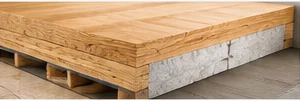
Wetrooms can be designed for both timber and solid floors, but the preparation differs. A low-profile tray does not, by itself, guarantee a level-access result: the complete build-up and waste connection need to fit.
Reference: Impey on wetroom floor construction.
Compare the starting points
| Check | Timber floor | Concrete / screed |
|---|---|---|
| Structure | Joist arrangement, condition and support. | Existing slab, screed and floor layers. |
| Waste route | Available space and obstructions below the boards. | Depth available for the trap and pipework. |
| Finished level | Former, supporting layers and final finish. | Recess or build-up needed to reach the threshold. |
| Questions | What support is needed, and can the waste route work? | What needs opening up, and are existing services affected? |
Survey before ordering
Have a competent installer assess the floor before selecting the system. Do not assume structural alterations are acceptable or start cutting into joists or a slab without appropriate assessment.
Record the existing floor level, proposed finished level, tray size and drain position on the same sketch. That gives everyone a shared starting point.
Specify a compatible system
Choose the former, drainage, waterproofing and supporting materials together. Preparation, fixing and curing instructions vary by product and substrate.
Further guidance: Impey floor-former installation resources.
Planning guidance, not installation instructions. Product-specific instructions and an on-site assessment take priority. Confirm suitability before purchasing or starting work.